
Seasonal cooking for fall works best when it feels warm, practical, and naturally connected to the way people gather. The season offers beautiful ingredients, but too many choices can make dinner feel busy. You may want squash, apples, mushrooms, herbs, pies, soups, and roasted dishes all at once. A better meal uses restraint. It chooses a clear flavor direction and repeats it gently. That approach makes the table feel cohesive without becoming predictable. When fall cooking stays focused, every dish feels more confident, comforting, and easy to serve.
Fall flavors can become heavy when every dish tries to be the star. Pumpkin, maple, sage, cinnamon, and roasted vegetables all have strong personalities. Use them with intention rather than abundance. A cozy autumn dinner resource helps you sort ideas into a cleaner plan. One sweet element, one earthy element, and one bright element usually create enough seasonal depth. The table feels more elegant when the flavors have room to breathe.
A successful fall dinner often begins with one flavor story. You might choose smoky and savory, sweet and spiced, earthy and herbal, or bright and harvest-inspired. This story guides the main dish, side dishes, dessert, and even drinks. For example, an earthy menu might include mushroom soup, roasted chicken, farro, greens, and pear dessert. A brighter menu could use pork, apple slaw, roasted carrots, and citrus. The story keeps decisions simple. It also helps every dish feel related without tasting the same.
Seasonal cooking for fall becomes easier when you shop with flexibility. Instead of forcing one exact recipe, look for what appears fresh, affordable, and appealing. Squash, root vegetables, apples, pears, mushrooms, greens, and herbs can support many different meals. A fall meal planning tool can help you turn those ingredients into a complete dinner. Flexibility saves money and improves flavor. It also makes seasonal cooking feel less rigid and more enjoyable.
Warm food defines fall, but freshness keeps the meal alive. Add herbs, citrus, vinegar, crisp greens, pickled onions, or fresh apples to cut through richer dishes. A creamy soup tastes better with toasted seeds and bright herbs. Roasted meat feels lighter with slaw or a sharp sauce. Even casseroles benefit from a fresh side salad. These contrasts make guests want another bite. Without brightness, fall meals can feel one-note. With it, comfort becomes more elegant and satisfying.
Seasonal cooking for fall often relies on dishes that improve with time. Braises, soups, roasted vegetables, sauces, and baked desserts can be prepared earlier in the day. That makes the dinner calmer and more enjoyable. A seasonal hosting plan helps you decide what to prep, warm, garnish, and serve last. Timing can matter as much as flavor. When the schedule works, the cook feels present instead of rushed.
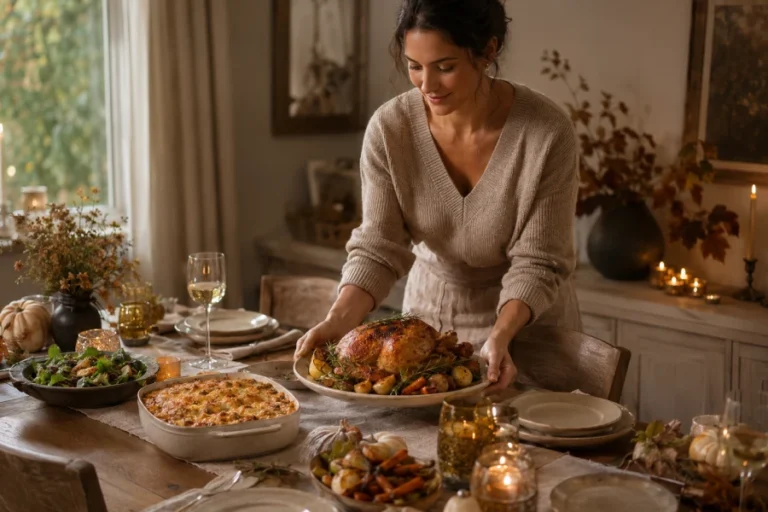
The table should support the meal without stealing attention. Candles, linen napkins, warm-toned dishes, wooden boards, and a few natural accents can echo the season beautifully. You do not need elaborate decor. You need a setting that makes the food feel welcome. A bowl of pears or a small bundle of herbs can look more natural than a crowded centerpiece. The same restraint that improves the menu improves the table. Seasonal dining feels most memorable when everything works together quietly.



Leave a comment