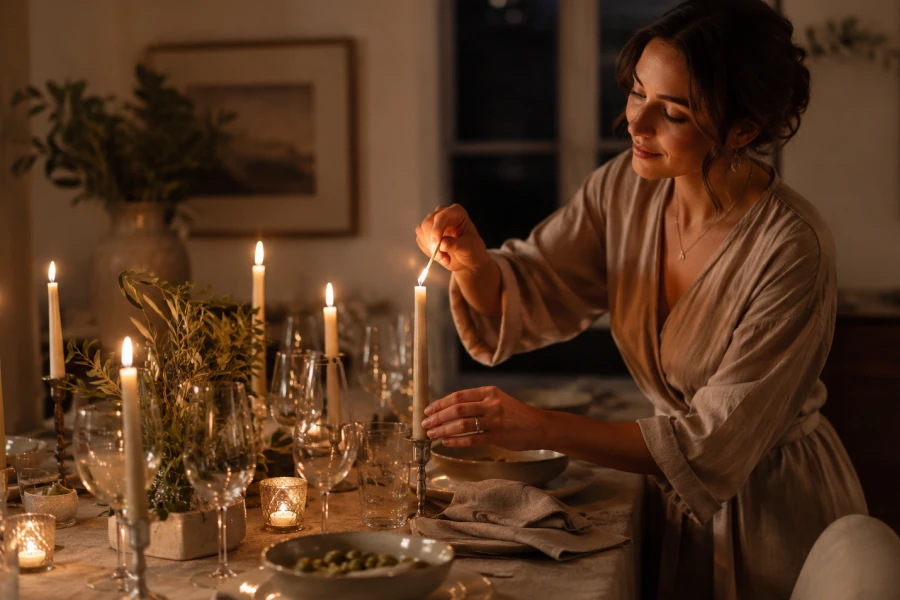
Candle lighting decor changes a room faster than almost any other styling choice. It softens edges, warms faces, and makes ordinary tables feel more intentional. The challenge is creating atmosphere without making the space too dark, crowded, or dramatic. Good lighting feels layered. It combines candle glow, background warmth, and practical visibility. When those pieces work together, the room feels cozy instead of staged. You do not need expensive fixtures or complicated styling. You need thoughtful placement, safe choices, and a clear mood for the evening.
Light shapes emotion before decor details become noticeable. Candlelight lowers visual contrast, softens shadows, and helps people relax into the moment. A cozy lighting setup can make a simple dinner feel intimate without changing the furniture or menu. The glow also draws attention to the table, which makes food and conversation feel more important. When you use candles with intention, they create atmosphere immediately. That speed makes lighting one of the most useful hosting tools.
Every room needs a different lighting plan. A bright kitchen may only need a few candles and dimmed overheads. A darker dining room may need lamps, sconces, or indirect light behind the table. Look for corners that disappear into shadow. Then add soft background light before placing candles. This prevents the room from feeling theatrical or uneven. Guests should see each other comfortably. Food should still look appetizing. The best glow feels warm and flattering, but it never makes the table difficult to use.
Candle lighting decor looks best when it includes different heights and sources. Low votives bring sparkle near plates. Tapers add elegance. Pillars create weight on sideboards or mantels. A romantic home lighting plan helps you combine these layers without clutter. Keep flames away from flowers, napkins, curtains, and serving dishes. Leave enough space for people to reach, pass plates, and move comfortably. Beauty matters, but safety and function make the evening feel relaxed.
Many rooms feel harsh because the light temperature fights the mood. Cool bulbs can make candlelight look weak or yellow. Warm bulbs support the glow and make skin tones look softer. Dimmed lamps, shaded bulbs, and indirect light usually work better than overhead brightness. If overhead lights must stay on, lower them as much as possible. You want layers that blend together. The candles should feel like part of the room, not a separate decoration. Warmth creates cohesion, and cohesion creates comfort.
Candle lighting decor on a dining table should frame the food, not block conversation. Keep tall candles slender and place them where guests can see around them. Use lower candles for smaller tables. A magical table lighting idea might include clustered votives, one pair of tapers, and a small reflective tray. Glass, brass, ceramic, and wood all change the mood. Choose materials that match the meal and the room. The result should feel welcoming, not overdesigned.
The final step is creating a routine you can repeat. Light candles shortly before guests arrive, dim the lamps, and check every flame location. Keep matches, a lighter, and a snuffer nearby. Avoid scented candles near food because fragrance can interfere with flavor. After dinner, extinguish flames before clearing quickly or leaving the room. These habits keep the atmosphere beautiful and safe. Once the routine becomes familiar, lighting feels effortless. Your home gains a signature evening mood that guests remember.




Leave a comment